 932 66 18 91
 info@22network.net
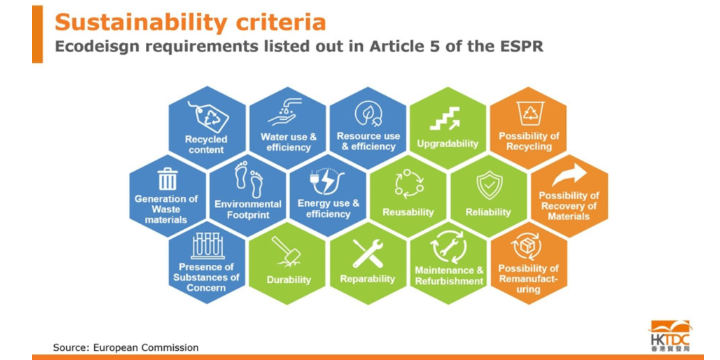
According to a report by the Hong Kong Trade Development Council (HKTDC), the European Union’s Ecodesign for Sustainable Products Regulation (ESPR) is set to redefine how products are designed, manufactured, and brought to market, placing sustainability at the core of the entire value chain.
In force since July 18, 2024, the ESPR replaces the previous Ecodesign Directive and significantly expands its scope. Unlike earlier legislation, it applies to nearly all physical products entering the EU market and establishes a comprehensive framework of sustainability requirements, covering aspects such as durability, repairability, recyclability, and environmental footprint.
Experts from HKTDC highlight that the regulation introduces key measures that will shape the future of global trade. Among them is the Digital Product Passport (DPP), which will provide detailed information on a product’s lifecycle, materials, and environmental impact, enhancing transparency across supply chains. Additionally, new rules will prohibit the destruction of unsold textiles and footwear from 2026, while mandatory Green Public Procurement will encourage public authorities to prioritise sustainable products.
The ESPR also reflects a broader shift towards circular economy principles, requiring companies to rethink product design from the outset. From material selection to end-of-life management, sustainability is no longer an added feature but a fundamental requirement for market access in the EU.
For international businesses, particularly those seeking to operate within the European market, this regulation represents both a challenge and an opportunity. Companies will need to adapt their supply chains, improve data transparency, and align with stricter environmental standards. At the same time, those able to anticipate and integrate these changes will be better positioned to compete in a rapidly growing global market for sustainable products.
The ESPR poses a clear example of how regulation can act as a driver of innovation, accelerating the transition towards more sustainable and resilient economic models. As cities and industries evolve, aligning technological development with environmental responsibility will be key to long-term competitiveness.
You can read the full article written by Alice Tsang and Simeon Woo, and published by HKTDC Research here: https://research.hktdc.com/en/article/MjI0MDQ2MjY1NA





Comentaris